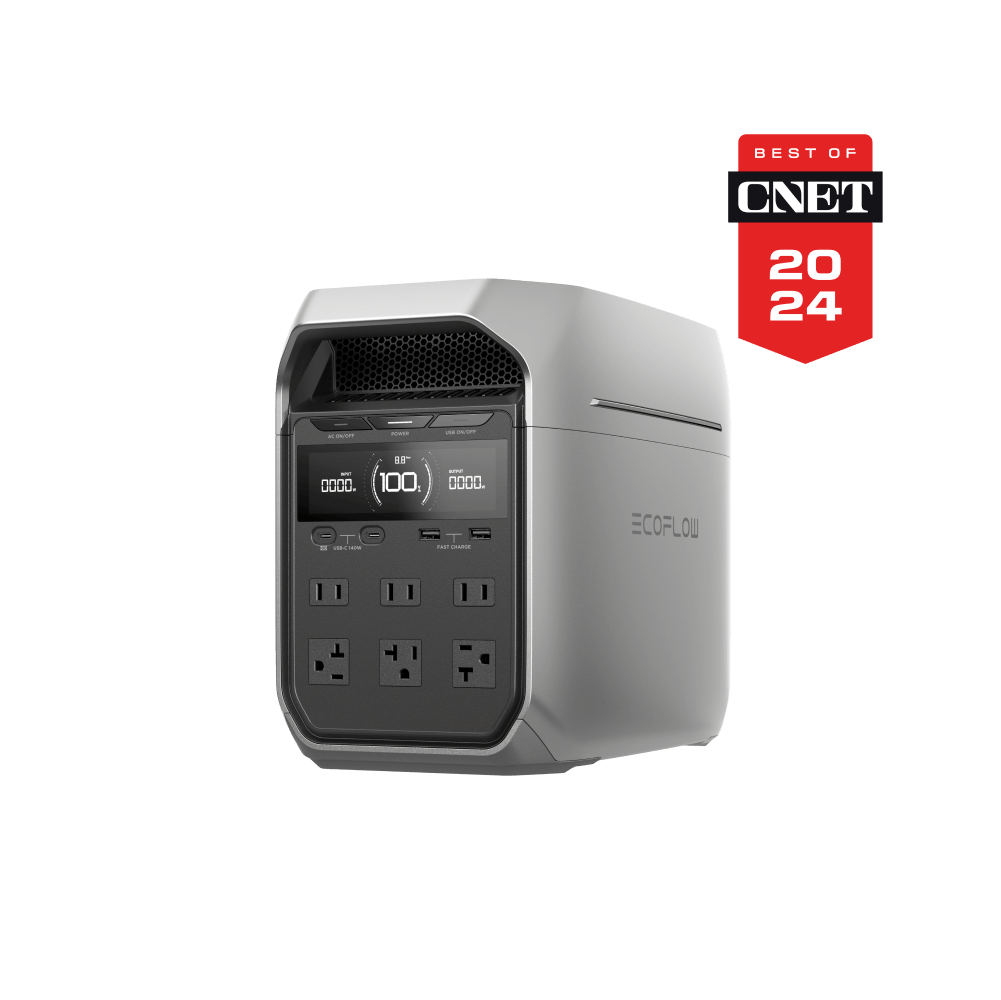
Portable power is most useful when it has a clear purpose. Whether your plan involves a trip or selected devices at home, the right EcoFlow setup starts with your real power needs—not simply the largest number on the product page.
Two numbers, two different jobs
Watt-hours describe stored energy; watts describe power delivery. Both matter. A station can have enough stored energy for your plan yet lack the output needed by a particular appliance. Conversely, an output figure that looks generous says little about how long a demanding load will run.
Check the continuous output specification and the requirements of your actual devices. Do not treat an advertised boost figure as interchangeable with continuous output. Runtime also depends on losses and operating conditions, so we do not promise hours of use from headline capacity alone.
Small setup or broader backup?
EcoFlow’s US RIVER 3 series includes the RIVER 3 Plus, listed with 286Wh capacity and 600W rated output. That gives you a concrete starting point for comparing a compact setup against your device list. Expansion configurations are also offered, but the base unit and a bundle should not be confused. [1]
The company’s US range also includes the DELTA 3 Plus in a higher-capacity class. EcoFlow lists 1,024Wh and 1,800W for that model. More capacity and output may broaden your options, but they do not make a unit automatically the right fit for your home, luggage or budget. [2, 3]
Plan the charging side too
Think about where you will replenish the battery. Wall charging, vehicle charging and solar are separate practical scenarios, and you should verify supported inputs and required accessories for the exact unit. A solar panel in a lifestyle photograph is not proof that it is included in the price.
For occasional travel, carrying and storing the equipment may be as important as capacity. For backup use, decide which selected devices matter most and check their starting and running requirements. A portable unit should not be treated as a whole-home electrical installation.
Compare complete baskets
Put the unit, any expansion battery, cables and intended charging accessories into one comparison. Then check the current US delivery eligibility, warranty and return terms. Package names can be similar even when included equipment differs.
The Worth & Well view
EcoFlow is worth shortlisting when you have a defined portable-power task. Start small enough to remain practical, but do not buy below the requirements of the devices you need. Our recommendation is a method rather than a universal model: measure the need, match both output and capacity, then compare the complete setup. This is a research-based guide; we have not run independent capacity, noise or charging tests.